
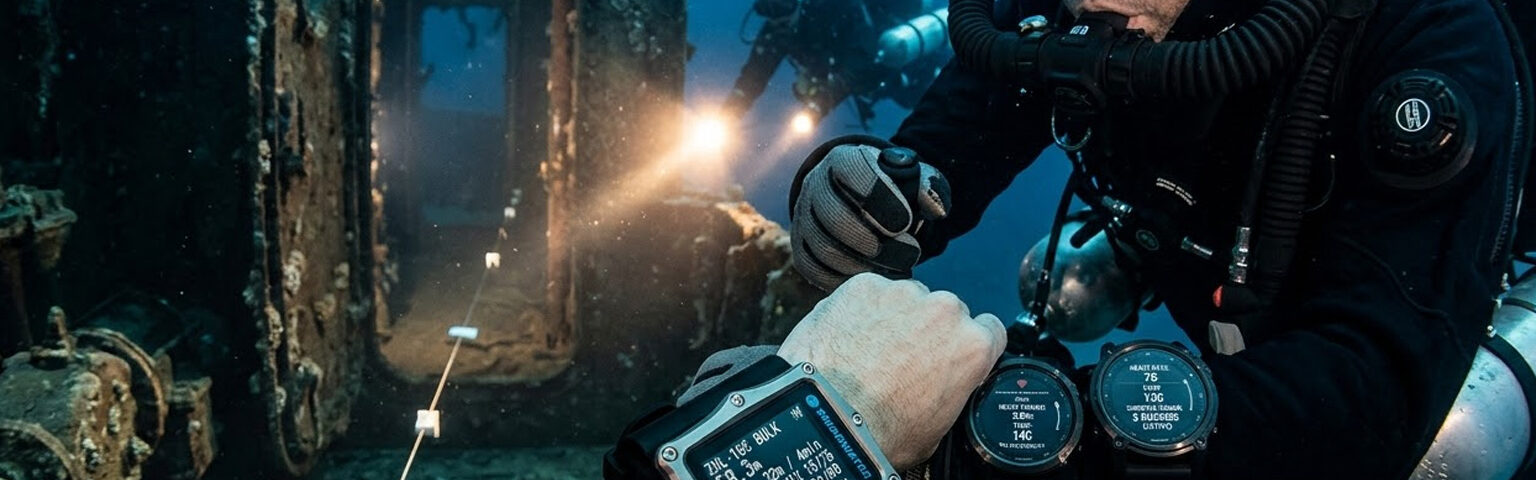
In the realm of technical diving, your computer is not a luxury accessory; it is the primary processing engine for your survival. As bottom times extend and gas mixes become increasingly complex, relying on a basic recreational algorithm is a dangerous gamble. The 2026 market has seen a massive leap in biometric integration and algorithmic transparency, separating the true technical instruments from the glorified digital watches.
Whether you are diving a closed-circuit rebreather (CCR) or managing a five-stage open-circuit bailout, here is our definitive guide to the dive computers setting the standard for precision telemetry this year.
The Undisputed King: Shearwater Perdix 2
It is impossible to discuss technical diving telemetry without addressing the Shearwater Perdix 2. Building upon an already legendary foundation, the Perdix 2 remains the gold standard for deep wreck and cave explorers. Its primary strength lies in its unyielding simplicity and absolute transparency.
Utilizing the open Bühlmann ZHL-16C algorithm, it allows divers complete control over their gradient factors. The titanium bezel and toughened aluminosilicate glass screen ensure it survives the brutal impacts of overhead environments. For divers running multiple gas mixes, the ability to seamlessly switch between up to five open-circuit and closed-circuit gases makes it the most versatile unit on the dive deck. (Check current pricing and availability here).
“A technical dive computer should never dictate your dive; it should seamlessly calculate the parameters you set for it, with absolute mathematical precision.”
The Biometric Innovator: Garmin Descent Mk3i
While Shearwater dominates the dedicated technical space, Garmin has successfully bridged the gap between a high-end smartwatch and a life-support instrument. The Garmin Descent Mk3i introduces SubWave sonar-based communication, allowing divers to monitor the tank pressures and depth of up to eight teammates simultaneously—a revolutionary feature for expedition leaders and instructors.
Furthermore, Garmin’s integration of surface GPS and physiological tracking (heart rate, sleep, and recovery metrics) aligns with the growing understanding that decompression stress is deeply tied to baseline physiology, a concept heavily researched by the Divers Alert Network (DAN). (View the Garmin Descent Mk3i specifications here).
Choosing Your Algorithm
When investing in a technical computer, the hardware is secondary to the algorithm. Avoid proprietary, locked algorithms that force you into overly conservative, mandatory stops. Ensure your chosen unit allows for custom gradient factors and offers a robust, user-replaceable battery system.
In the deep, the only currency that matters is reliable data. Equip yourself accordingly.