While Thailand is globally recognized as a premier destination for recreational diving, its technical potential is often overshadowed by the sheer volume of open-water certifications issued on its islands. However, beneath the bustling shallow reefs of the Gulf and the Andaman Sea lies a complex network of deep pinnacles, submerged wrecks, and challenging hydrodynamics perfectly suited for the advanced explorer.
The Deep Wrecks of the Gulf
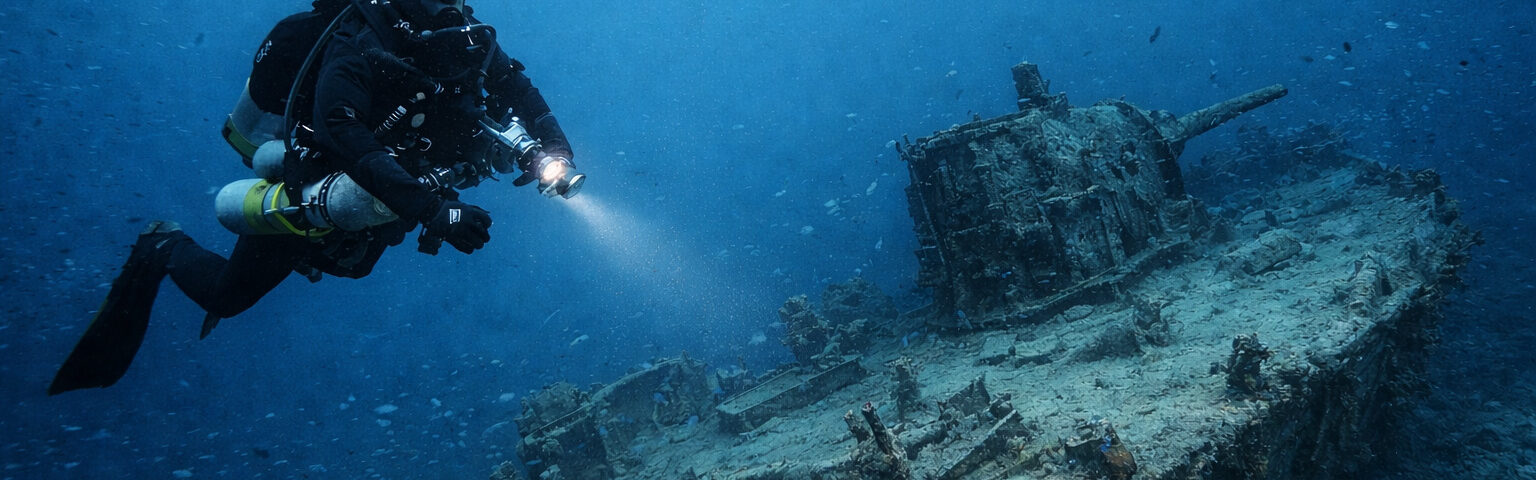
Islands like Koh Tao are not just entry-level certification hubs; they serve as strategic staging grounds for deep wreck penetration. Sites like the HTMS Sattakut offer controlled environments for Advanced Nitrox and Decompression Procedures training, while deeper, less-frequented wrecks further out in the Gulf demand rigorous twinset logistics and precise gas blending.
The thermal advantages of the region are significant. Executing a 90-minute runtime with extended decompression stops is physiologically far less taxing in 29°C water compared to cold-water environments, allowing technical divers to focus entirely on task loading, trim, and photogrammetry rather than combating hypothermia.
“The Gulf of Thailand provides a deceptive calm on the surface, but its deeper architectures demand the same rigorous telemetry and gas planning as any cold-water expedition.”
The Logistics of Tropical Tech
Operating heavy closed-circuit rebreathers (CCR) or manifolded twinsets in the tropical heat requires strict pre-dive protocols. The risk of surface dehydration is severe, and the logistics of securing medical-grade oxygen and helium fills on remote islands necessitate building relationships with dedicated, high-tier technical diving facilities rather than standard tourist operators.
Staging Mixed-Team Expeditions
Often, technical expeditions to Southeast Asia involve mixed-experience teams—elite explorers accompanied by partners or surface support crew who are strictly recreational divers. If you are coordinating logistics for team members who are not yet technically certified, establishing a base in a versatile hub is critical.
To ensure your recreational team members have a safe, high-quality experience while you are executing deep profiles, we highly recommend consulting this definitive 2026 guide to scuba diving in Thailand. It cuts through the tourist noise, offering a no-nonsense breakdown of the best beginner hubs, Discover Scuba Diving (DSD) options, and a ruthless checklist for vetting a dive center’s safety culture.
By properly staging your surface support and recreational divers, you free yourself to focus entirely on the deep-water objectives ahead.